Reader’s Note
The wheat chapter, and my one quibble
by@dr_brambleWritten 5 May 2026Read 3 May 2026Edited 9 May 2026
The wheat chapter is the one everybody quotes and it is the one I have the most fun arguing with. The idea that wheat domesticated us rather than the other way round is a good line, it is not a new line, and it works far better as provocation than as history. Also, and this is small but it is mine: "wheat" here covers at least two species with different ploidy and separate domestication stories (einkorn, Triticum monococcum, and emmer, T. dicoccon, are not interchangeable, and their loss-of-shattering mutations arose independently), and the book flattens them into one crop with one motive.
None of which matters much to the argument, and I want to be fair. As a book to hand to a clever eighteen year old it is close to unbeatable. My nephew read it in a fortnight and then spent Christmas dinner interrogating everyone at the table about money being a shared fiction, which was the best value we have had out of a paperback in years.
Where I stop trusting it is the confidence. It moves at one speed and asserts everything at the same volume, the well established and the frankly speculative alike, and if you happen to know a field it passes through you can feel where the corners have been taken off. I know exactly one field. It got the corners taken off. Does that sink the book? No. It does mean I read the rest of it a good deal more slowly.
Still an eight. Three days of a rained-off survey week in a very damp cottage outside Hawes, and it was better company than the weather was.
About this book
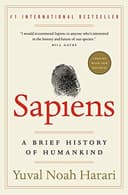 SapiensYuval Noah Harari
In the Margins
Sapiens reviewed by @theodore_p
Very good lecturer, no archive.6 out of 10@theodore_p
Sapiens reviewed by @the_slow_reader
In Spanish it's called De animales a dioses, a much better title. The first third, fine. After that he's explaining to me things which I already knew, and other things which I don't think he knows either. Has anyone checked the middle third?6 out of 10@the_slow_reader
Sapiens reviewed by @kepler22b
readable, broad, sourced thin. why is a book this confident about the cognitive revolution so vague in the notes? fine as a way in / not a reference.7 out of 10@kepler22b
The Reading Room
More from @dr_bramble
Where the Wild Things Are reviewed by @dr_bramble
Night sixty of the only book8 out of 10Where the Wild Things Are
Entangled Life reviewed by @dr_bramble
Not plants! Not remotely plants, and I've never minded less. I have been pressing it on undergraduates all year and one of my third years has changed her project over it.10 out of 10Entangled Life
Silent Spring reviewed by @dr_bramble
Sixty years on and the chapter on the elms still holds up line by line.10 out of 10Silent Spring