Reader’s Note
My mother reads four books a year. She finished this one in two days.
by@w_okonkwoWritten 21 November 2025Read 19 November 2025
My mother reads maybe four books a year and mostly about gardening. She took this off my table and finished it in two days. I lead with that because everything else I want to say is complicated and that isn't.
Start with the shape, because the shape is the achievement. Keefe opens with a woman being taken out of a flat in Divis in 1972 in front of her children, and then he leaves her there. For a long stretch you are somewhere else entirely: inside the Price sisters' war, the bomb runs, the hunger strikes, a movement that believed it was an army and was policed as a gang. Jean McConville sits underneath all of it, unmentioned for chapters at a time, and the not-mentioning is doing the work. By the time the book comes back to her you have spent a long time in the company of people who might have killed her, several of whom you have come to like. That's an ugly thing to engineer and he engineers it beautifully.
Dolours Price is the engine. Keefe is plainly fascinated by her: the drama student, the civil rights marcher who was beaten at Burntollet and concluded that peaceful protest was a dead end, the woman who bombed London at twenty-two and was force-fed for months, and who ended up decades later giving interviews she was not supposed to give because she could not stand what the movement had turned into. He resists making her a tragic heroine, but only just, and I think he loses that fight in a couple of paragraphs. It's the one place his sympathies are visible.
Brendan Hughes is the other spine. The Boston College tapes — an oral history project that promised a confidentiality it could not actually deliver, and was then dragged through subpoenas until the promise collapsed — are both his main source and one of his subjects. That doubling is what lifts it out of true crime. It turns into an argument about whether a thing like this can be recorded at all: who talks, when they talk, what happens to them afterwards, and what a historian owes people who only spoke because they were told the tape stayed sealed until they died. Keefe is honest that his own book is another turn of that screw.
Then there is the man at the centre who has spent forty years denying he was ever in the organisation. I'll leave the name out since half of you haven't read it yet. What Keefe does there is patient and lethal. He never calls anybody a liar. He lays out what every other person on those tapes says, sets the denial next to it, and steps back. The effect is far worse than an accusation would have been.
Two reservations, because nine isn't ten. The final section, where he identifies who most likely pulled the trigger, is superbly done and I still cannot decide whether it should exist. He is careful and he is caveated, and this is nonetheless a private citizen being named in a bestseller on the strength of tapes and inference. Femi says it's a stunt and the family deserved better. The family, from the interviews I've read, mostly wanted a name. My discomfort isn't the same as an objection, and I notice I keep recommending the book regardless.
The other reservation is scope. There is very little loyalist violence here and almost no ordinary Protestant Belfast. That's a legitimate authorial choice, since he's writing about one organisation and five or six people inside it, but readers finish it convinced they have understood the conflict when they have understood one strand of it. Read something else afterwards before you go telling anyone what the Troubles were about.
Publishing note: the jacket calls it a murder mystery, which was a decision made by somebody whose job is to shift copies, and they did their job. It isn't a mystery, and the pleasure of it has nothing to do with whodunnit. It's watching people make a decision at nineteen that they are still paying for at sixty-five, and watching the state and the movement separately conclude that they are expendable.
Nine. It will eat a weekend. Don't start it on a Sunday night the way I did.
About this book
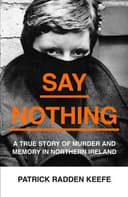 Say NothingPatrick Radden Keefe
In the Margins
Say Nothing reviewed by @commuterfiction
A woman is taken from a flat in Belfast in 1972.9 out of 10@commuterfiction
Say Nothing reviewed by @bookclubdropout
Not one person talked about their week first, which has never once happened.8 out of 10@bookclubdropout
1 reader agrees with this reviewSay Nothing reviewed by @theodore_p
Extraordinary reporting, unusually honest sourcing, and a final movement that gives its least-evidenced conclusion the most dramatic position in the structure.8 out of 10@theodore_p
14 readers agree with this review
The Reading Room
More from @w_okonkwo
Empire of Pain reviewed by @w_okonkwo
Arthur is the real villain.8 out of 10Empire of Pain
6 readers agree with this reviewJust Kids reviewed by @w_okonkwo
Still the best book about being broke.10 out of 10Just Kids
To Kill a Mockingbird reviewed by @w_okonkwo
Issue 41 cost me sixty-one subscribers.5 out of 10To Kill a Mockingbird