Reader’s Note
Issue 41 cost me sixty-one subscribers.
by@w_okonkwoWritten 18 August 2026Read 17 August 2026
Issue 41 cost me sixty-one subscribers. I counted, obviously I counted, and several of you have asked me to restate the argument here, so: this is a good novel that has been handed a job no novel can do, and the job has warped the way we read it.
What's genuinely excellent first, because I'm not a vandal. The Maycomb summers are wonderful. The Radley house, the dares, the knothole, Dill turning up every June like weather — that material is as good as any American childhood ever written and it comes from someone with a real ear for how children negotiate with each other. The voice, an adult recalling a child without ever fully dropping into the child, is difficult to sustain for a whole book, and she sustains it.
Then there's the trial, which is a superb piece of construction, and which is the reason this book sits on every syllabus in the English-speaking world, and which is where my problem starts.
The trial gives a white reader somewhere comfortable to stand. You sit in the gallery next to Scout. You watch a decent white lawyer be decent. When the verdict lands you are invited to feel the injustice as an ache, and then the balcony rises for Atticus and the ache resolves into something almost warm. Tom Robinson dies offstage and is reported in a paragraph. His interior life is not in this book at all. Calpurnia's is barely in it. The entire apparatus is organised around what racism does to the moral education of a white child.
That is a legitimate subject! It simply isn't the subject the book gets treated as covering. Fifty years of curricula have used this as the American race novel and it simply isn't one. It's a novel about a family's self-image, and it flatters the reader in precisely the way a syllabus likes to be flattered.
Then Go Set a Watchman turned up and made a mess I'm still enjoying. Whatever you think of how it reached the market, and I think the way that manuscript was published stinks, it showed us the earlier draft: the father is a segregationist, the daughter finds out, and what follows is a woman having to become a separate person from the man who raised her. That's a much harder novel. An editor told her, quite reasonably, to write the flashbacks instead, and the flashbacks went on to sell in the tens of millions. You can still see the sharper book standing behind the beloved one.
The plotting has aged, too. The rescue at the end, Boo arriving as a sort of household supernatural, the sheriff quietly agreeing to file the truth away for the sake of a gentle man. It's elegant, and it also tells you that the moral universe here is small enough to be managed by two decent men on a porch. Nothing in Maycomb is unfixable if the right people are kind. I don't believe that, and I don't think the novel earns it.
Five looks harsh written down and I'll defend it. It's a five because I keep having to argue with what the book is used for, and because I have watched it be the entire race-literature component of an English course while Baldwin sat unread on a shelf twenty feet away. Give a fourteen-year-old this and The Fire Next Time in the same term and see which one they still think about at thirty. Which one do you think it is?
The letters split about how you'd expect. Half were people telling me I'd missed the point of a children's book, and it isn't a children's book, it just has a child in it. Several came from teachers, all of whom agreed with me and none of whom can change a reading list. One was from a woman in Cork who has read it every August since 1974 and hers was the only one that gave me pause, because she wasn't defending the politics at all. She just loves Scout. Fair enough. So do I.
Femi has it at nine and says I'm reviewing the syllabus instead of the book. He might be right. My counter is that past a certain level of fame a book and its uses can't be separated, and this one crossed that line before I was born.
About this book
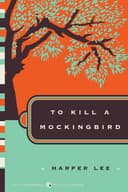 To Kill a MockingbirdHarper Lee
In the Margins
To Kill a Mockingbird reviewed by @libbyoverdrive
Fourteen copies available, no queue, no waiting, nobody wants it because everyone had to do it at school. Their loss! I'd never actually finished it before.8 out of 10@libbyoverdrive
To Kill a Mockingbird reviewed by @margaretreads
Seven, and by the end I'd rather have taught something else7 out of 10@margaretreads
The Reading Room
More from @w_okonkwo
Empire of Pain reviewed by @w_okonkwo
Arthur is the real villain.8 out of 10Empire of Pain
6 readers agree with this reviewJust Kids reviewed by @w_okonkwo
Still the best book about being broke.10 out of 10Just Kids
Between the World and Me reviewed by @w_okonkwo
The letter form does something the argument around this book in 2015 never let it do. Read it as a letter.8 out of 10Between the World and Me
2 readers agree with this review