Reader’s Note
Arthur is the real villain.
by@w_okonkwoWritten 20 August 2026Read 20 August 2026
Everyone comes to this for the OxyContin years. The best part happens forty years earlier.
Arthur Sackler more or less invented the modern business of selling a drug to a doctor: the ghost-written journal pieces, the advertising dressed as science, a sales force trained above all to be liked. He did it with Valium. He was dead long before OxyContin existed, and Keefe's argument, which he never states as baldly as I'm stating it, is that the machine was already built and the next generation simply pointed it at a stronger molecule.
Then the lawyers take over, and here I'd push back a bit. The middle is a very long fight conducted through depositions, and depositions are not naturally dramatic. Keefe is good enough to keep it moving; it still sags. I read the section on the 2007 plea in a dentist's waiting room and lost my place twice, and I don't think that was the dentist's fault.
The family portrait is the other pleasure. Three brothers, then their children, then the cousins — then museum wings with the name on them in a font somebody was paid handsomely to choose. He is very funny about the philanthropy without ever writing an actual joke.
Where it can't win: nobody in it changes their mind. Nobody gets an arc, because these people didn't have one. That is honest reporting and it's also why the book feels less alive than Say Nothing, where everybody is haunted.
Eight. The endnotes reward being read properly, which is a sentence I write about maybe one book a year.
About this book
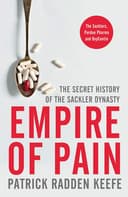 Empire of PainPatrick Radden Keefe
The Reading Room
More from @w_okonkwo
Just Kids reviewed by @w_okonkwo
Still the best book about being broke.10 out of 10Just Kids
To Kill a Mockingbird reviewed by @w_okonkwo
Issue 41 cost me sixty-one subscribers.5 out of 10To Kill a Mockingbird
Between the World and Me reviewed by @w_okonkwo
The letter form does something the argument around this book in 2015 never let it do. Read it as a letter.8 out of 10Between the World and Me
2 readers agree with this review