Reader’s Note
Seven, and by the end I'd rather have taught something else
by@margaretreadsWritten 13 January 2026Read 12 January 2026Edited 16 January 2026
If you want to know when a book has stopped being read and started being administered, look at what happens to it in Year 9. This was on the syllabus for most of my working life, and by the end I could tell which chapter a class had reached from the noise in the corridor.
The good part is not the courtroom. It is the long stretch before anything happens: Boo's presents in the tree, the tyre, Miss Maudie's house burning down and Scout finding a blanket round her shoulders without knowing who put it there. That is genuine childhood, written by somebody who remembered it precisely, and it's why the novel survives everything else about it.
The difficulty is Atticus, and the further difficulty is that the objection has itself become compulsory. Every child in the country is told, at roughly the same point in the term, that the novel is limited, that Tom Robinson has no interior life whatsoever, that the whole apparatus requires a black man to be destroyed so two white children can learn something. All true. Perfectly true. But there is something deadening about a book that arrives pre-criticised with the objections stapled to the front, so that nobody is ever permitted to be moved by it first and troubled by it afterwards. I watched it happen and I do not believe we handled it at all well.
Lorraine used to say we should simply teach something else and stop wringing our hands. She was probably right. There are two dozen novels doing this work now that were not available to us in 1986.
What I'd defend: Calpurnia's church, the mob at the jail, and Mrs Dubose, the best thing in this novel and the one nobody discusses. A vicious old racist dying in agony coming off morphine, and Atticus calls her the bravest person he ever knew. That chapter is doing something genuinely difficult and it has never once turned up on an exam paper.
What I can't defend is the ending. Heck Tate's arrangement is a stitch-up, Scout's line about it being sort of like shooting a mockingbird is the author reaching through the page to shake your hand, and the last stretch is so warm that everybody gets to go home comfortable after a book which ought not to let anybody go home comfortable.
Also, and this is petty: the accent transcription is heavy going. I've read a lot of it out and it does not come off the page easily.
Seven. Priya's year did it in 1998; half of them loved it and the other half never mentioned it again, which is about right for a set text. I'd still push it at a boy of thirteen who had found it himself. Being made to, at scale, is what dried it out.
My card says I first read it in 1974 (no, 1975 — the entry is in pencil, which means school). I gave it a ten then.
About this book
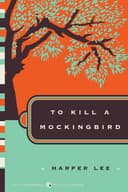 To Kill a MockingbirdHarper Lee
In the Margins
To Kill a Mockingbird reviewed by @w_okonkwo
Issue 41 cost me sixty-one subscribers.5 out of 10@w_okonkwo
To Kill a Mockingbird reviewed by @libbyoverdrive
Fourteen copies available, no queue, no waiting, nobody wants it because everyone had to do it at school. Their loss! I'd never actually finished it before.8 out of 10@libbyoverdrive
The Reading Room
More from @margaretreads
Siddhartha reviewed by @margaretreads
A slim one, and I never have known where to shelve it8 out of 10Siddhartha
The Haunting of Hill House reviewed by @margaretreads
That opening paragraph! Nothing else in it reaches that pitch again, and I say so as somebody who lent it out constantly. Eleanor is superb; the house is a bit of a set. I'd take Jackson's short stories over it, honestly.7 out of 10The Haunting of Hill House
Becoming reviewed by @margaretreads
The South Side chapters are the book. Everything after the second campaign reads as though a committee sat in on it, politely. I've reserved it twice for other people since, which is my only real measure of anything.7 out of 10Becoming