Reader’s Note
Battle Royal and the paint factory are worth the price on their own. The Brotherhood chapters are a slog; I'll take the trade.
by@w_okonkwoWritten 24 May 2026Read 22 May 2026
Battle Royal first, because if you have never read it, that chapter stands alone and it will cost you twenty minutes. A group of Black teenagers is brought to a hotel ballroom to entertain the town's white businessmen before the narrator delivers his prize-winning speech about humility. They are blindfolded, made to fight each other, made to scramble for coins on an electrified rug. Then he gives the speech with blood in his mouth and they hand him a scholarship. Published in 1952! Nothing written since has improved on it.
The paint factory is the other one. Optic White — the whitest white available, made by stirring ten drops of black into every bucket — and Ellison never nudges you once. He runs the scene, blows up the boiler room, and puts his narrator in a hospital receiving a treatment that amounts to an erasure.
Between and around those set pieces is a long novel about a young man being used, in sequence, by everyone: the college that expels him for showing a trustee something true, the factory, the union, the Brotherhood that wants his voice and not his opinions, Ras who wants his loyalty, Rinehart who demonstrates what a man with no fixed self can get away with in Harlem.
I'll be honest about the Brotherhood chapters. They sag. Ellison is settling accounts with the Communist Party of the thirties and that argument was considerably hotter in 1952 than it can be now. The novel sags once the committee meetings pile up and its energy drains away into a factional dispute most readers cannot reconstruct without a footnote. Have you ever met anybody who loves that section? I haven't, and I don't believe the ones who claim to.
A word about the prose, which people forget to mention because they are busy arguing about the politics. Ellison came out of jazz criticism and you can hear it in the sentences. The narrator's register keeps shifting depending on who is using him that week: sermon into pamphlet into street talk into the flattened committee English of the Brotherhood. Read a page of it aloud and the whole thing changes.
Then Harlem burns and the last stretch gets its engine back, and the ending in the basement with all those bulbs is one of the great images in the language.
The reception is a story in itself. National Book Award, immediate canonisation, then forty years of working on a second novel that never arrived: thousands of manuscript pages, a house fire, a posthumous edit. I think about that more than is good for me. A young man writes the American novel about not being seen and then spends the rest of his life being seen and unable to finish anything.
Nine. Take the Brotherhood section slowly or skim it, I genuinely don't mind which, but don't stop there, because everything after Harlem is worth the wait.
About this book
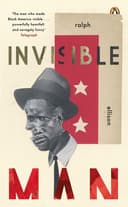 Invisible ManRalph Ellison
The Reading Room
More from @w_okonkwo
Empire of Pain reviewed by @w_okonkwo
Arthur is the real villain.8 out of 10Empire of Pain
6 readers agree with this reviewJust Kids reviewed by @w_okonkwo
Still the best book about being broke.10 out of 10Just Kids
To Kill a Mockingbird reviewed by @w_okonkwo
Issue 41 cost me sixty-one subscribers.5 out of 10To Kill a Mockingbird