Reader’s Note
Nobody warns you how funny it is, or how much of it is people failing to finish a conversation in an unbearably hot room.
by@theodore_pWritten 20 August 2025Read 18 August 2025
For the first stretch this reads like a thriller, and then Porfiry Petrovich walks in and it becomes an interrogation comedy, which is not a phrase anyone uses about this novel and which I intend to defend. Those three interviews are funny. Porfiry circles, digresses, apologises, mentions an article Raskolnikov once published, wanders off, comes back, and the entire time both men know precisely what is happening and neither will say it. Why does nobody warn you? I was twenty-two and had been led to expect unbroken Russian gloom.
On translations, briefly, since it determines a great deal. I grew up on Garnett, which is fluent and smooths him out. Pevear and Volokhonsky keep the roughness and the repetitions and are what I'd use now, though their English can clunk badly. McDuff is a reasonable middle. Whichever you take, notice how often Dostoevsky repeats a single word inside a paragraph. That is deliberate. It is a mind snagging, and translators who tidy it are removing the symptom.
The heat is the thing I'd point a first-time reader towards. Petersburg in July, the stairwells, the smell, the taverns, everybody slightly ill and slightly drunk and talking far too much. The crime is committed by a man who has not eaten properly in weeks and has been lying in a room the size of a cupboard, and the novel's psychology is not detached from that. It is made of it. The theory about extraordinary men is what he tells himself. The fever is what's happening.
Where it loses a point. Sonya. She is required by the design to be the axis of redemption and is given almost nothing to be a person with, and the Lazarus scene, which everyone cites, has always felt to me like the machinery showing through. Also the epilogue. I know the arguments for it, I have made several of them in seminars, and I still think Siberia and the conversion arrive in a compressed summarising register that the preceding novel has trained us not to accept.
Svidrigailov, though. His last night — the hotel room, the mouse, the dreams, the girl — is the finest sustained passage in the book, and he is not the protagonist and it is not about the murder at all. Dostoevsky was capable of dropping the best writing he had into a subplot and walking away from it without a backward glance.
I have taught this exactly once, badly, in a Great Books module I was press-ganged into, and the students wanted to debate whether Raskolnikov was right, which is the question the novel is built to provoke and also a trap. He isn't right. He isn't even coherent. The interesting thing is watching a clever man assemble a philosophy out of hunger and pride and then prove unable to live inside it for three days.
Nine. Get an edition with decent notes; the Russian name system will otherwise defeat you, and half of them assume you already know that Rodion, Rodya and Rodion Romanovich are one person.
About this book
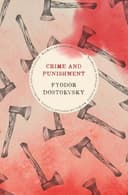 Crime and PunishmentFyodor Dostoevsky
In the Margins
Crime and Punishment reviewed by @the_slow_reader
Three editions on one table.8 out of 10@the_slow_reader
Crime and Punishment reviewed by @books_and_bins
He does the murder early doors then greets about it for the rest of the book. Porfiry's worth the ticket, mind. Long, but no bad.7 out of 10@books_and_bins
Crime and Punishment reviewed by @an_ordinary_tuesday
A young man's conscience eating him alive from the inside out over one long hot summer. The epilogue redeemed it for me; my book group thought the epilogue ruined it. We are still arguing in the car park.8 out of 10@an_ordinary_tuesday
The Reading Room
More from @theodore_p
Tinker Tailor Soldier Spy reviewed by @theodore_p
Smiley reconstructing an old file in a rented room beats any car chase ever filmed. The real subject is institutional decline and the spying is only how it gets delivered. Fifty pages of tradecraft vocabulary, and then you simply have it.9 out of 10Tinker Tailor Soldier Spy
Sapiens reviewed by @theodore_p
Very good lecturer, no archive.6 out of 10Sapiens
Letters from a Stoic reviewed by @theodore_p
Campbell's selection, not the complete letters. That matters.8 out of 10Letters from a Stoic