Reader’s Note
Three editions on one table.
by@the_slow_readerWritten 9 July 2026Read 8 July 2026Edited 10 July 2026
There are three copies of this in my flat and my husband would prefer there were fewer.
- Constance Garnett, a Wordsworth paperback bought for almost nothing in a charity shop in Bath.
- Oliver Ready for Penguin, 2014, a present from a colleague who does not read novels.
- Juan López-Morillas in Spanish, Alianza, mine since I was nineteen and currently held together with tape.
Reading them side by side wasn't the plan — nobody plans that. What happened is that I started the Ready in October, reached Marmeladov in the tavern, and thought: this isn't the speech I remember. So the other two came off the shelf and I lost about a month.
The title first, because it's the thing I always want to explain and nobody ever asks. The Russian noun in the title, prestuplenie, has a stepping-across inside it. Transgression in the old physical sense. A line is there and Raskolnikov puts his foot over it. English hands you crime, which is a police word, a word out of the courts. Spanish hands you crimen, which is worse, because in Spanish it leans hard towards murder in particular. So English readers and Spanish readers both open the book holding a legal noun, when the Russian gave them a movement of the body. Ready knows this and works all the way through to keep the crossing language visible. Garnett doesn't, or didn't think it worth the trouble. López-Morillas couldn't have done it in the title even had he wanted to, and I'm not certain he wanted to.
Does it matter? A little, and here's where. Raskolnikov's theory isn't really about murder. It's about who is permitted to cross and who has to stay on their own side. Every time the crossing vocabulary returns, and it returns constantly, on doorsteps and bridges and thresholds and those stairs he's forever going up and down, Ready lets you hear the title ring. In Garnett all of that is only furniture.
Now the part where I'm less sure of myself. Garnett is supposed to be the old-fashioned one who smooths everything into polite Edwardian English, and there's truth in it. But she is fast. Extremely fast. The final movement, the pursuit, Porfiry arriving and sitting down and declining to leave, goes past like a train. Ready is more accurate and I read him more slowly, and slow is not what this novel wants at the end. Which edition is better depends of what you want from an evening.
I love the Spanish for reasons which have nothing to do with literature. It's the copy which lived in my grandmother's house. There's a coffee ring on page ninety-something and somebody else's pencil in the margins. Whoever it was underlined every appearance of the word dream and nothing else at all, which is either a student with an essay due or a person having a very bad year. I've never managed to decide.
Eight and no more, and the two I'm keeping back are entirely in the final stretch. Siberia, Sonya at the gate, the Gospel under the pillow, the sudden dawn of the new life. I don't believe it. I didn't believe it at nineteen either. Everything before is written from inside the fever; the epilogue is written calmly, at a desk, by a man who wants to arrive somewhere decent. My book group in Valencia split neatly on this. The two Catholics held that the epilogue is the reason the novel exists and the rest of us thought it a coat put on at the door. Nothing was resolved. We ate.
Svidrigailov, though. Nobody warns you about Svidrigailov. He gets less room than anyone important and he's the only person in the book who understands his own position completely, and what he does with that understanding, in the rain, near the fire station, with the small revolver, is the passage I'd keep if I could keep one. Ready is superb there. Garnett is good there too. Even the Spanish, stiff in places, goes quiet in the right way.
I still mean to try McDuff. Somebody at a talk I assisted to last spring said McDuff is the one for the dreams, the horse, the church at the end of the world, and I wrote it in the notebook and then bought something else entirely.
Starting out: Ready. Coming back and wanting the pace: Garnett. If a grandmother left you a shelf, that one.
About this book
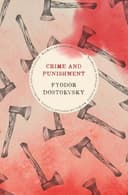 Crime and PunishmentFyodor Dostoevsky
In the Margins
Crime and Punishment reviewed by @books_and_bins
He does the murder early doors then greets about it for the rest of the book. Porfiry's worth the ticket, mind. Long, but no bad.7 out of 10@books_and_bins
Crime and Punishment reviewed by @an_ordinary_tuesday
A young man's conscience eating him alive from the inside out over one long hot summer. The epilogue redeemed it for me; my book group thought the epilogue ruined it. We are still arguing in the car park.8 out of 10@an_ordinary_tuesday
Crime and Punishment reviewed by @theodore_p
Nobody warns you how funny it is, or how much of it is people failing to finish a conversation in an unbearably hot room.9 out of 10@theodore_p
The Reading Room
More from @the_slow_reader
War and Peace reviewed by @the_slow_reader
The war is better than the peace.9 out of 10War and Peace
Sapiens reviewed by @the_slow_reader
In Spanish it's called De animales a dioses, a much better title. The first third, fine. After that he's explaining to me things which I already knew, and other things which I don't think he knows either. Has anyone checked the middle third?6 out of 10Sapiens
Beloved reviewed by @the_slow_reader
Took all summer.9 out of 10Beloved