Reader’s Note
structurally excellent, epidemiologically silly
by@kepler22bWritten 22 February 2026Read 20 February 2026
best-built novel i read last year and the epidemiology is a joke, so both.
structure first. it moves between the night arthur leander dies on stage, the weeks of the collapse, and year twenty with the travelling symphony, and the joins are made by objects rather than by chapters announcing a jump. a glass paperweight. a comic almost nobody has read. a snow globe. you can track the objects and get a second, quieter plot for free. i did that on a second pass with a pen, and it holds: every hand-off is placed, nothing turns up by convenience.
the museum of civilisation in the airport is the best idea here. it isn't a survival plot, it's a curation plot. someone deciding what is worth keeping, and putting the passports and the phones and the motorbike behind glass. much more interesting than another scavenging novel.
now the flu. a pathogen with a kill rate that high and an onset that fast burns out before it saturates, and this one is given both, plus global spread inside about two days of narrated time. i don't need a model in an appendix. one line acknowledging that the thing had to travel would have done it.
then the twenty years after, where nobody does arithmetic. no smelting, no seed stock, no salt, no discussion of where the horses' winter feed comes from in michigan, tinned food lasting roughly a decade past when it would. the single attempt at electricity is treated as a marvel rather than the first thing a few hundred surviving engineers would organise.
8 anyway, because the book isn't trying to be a systems novel and i knew that by chapter three. it's about what art is for when the audience infrastructure is gone, and the shakespeare-in-the-ruins conceit should be unbearable and isn't, mostly because the symphony argue about it constantly and a third of them think it's stupid.
kirsten works. jeevan works, and his stretch in the flat with the shopping is the only part of the collapse written at ground level, hour by hour. the prophet strand is the weakest thread and i think it exists to give year twenty a threat it didn't need.
read it on a work trip in two sittings. bought a second copy for a colleague who then argued with me for an hour about the mortality rate, so at least i'm not alone in that.
no index. i'd have read one.
About this book
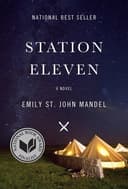 Station ElevenEmily St. John Mandel
In the Margins
Station Eleven reviewed by @commuterfiction
An actor dies on stage during King Lear and a flu arrives in the same week. Twenty years later a group of musicians and actors walk between settlements in Michigan performing Shakespeare. A comic book connects them.7 out of 10@commuterfiction
Station Eleven reviewed by @quietcarriage
Read a novel about the end of the world on public transport, surrounded by strangers coughing, and I'd do it again! The Travelling Symphony in the snow. Survival is insufficient, yes, fine, put it on a caravan — it worked on me.9 out of 10@quietcarriage
Station Eleven reviewed by @tinyapartmentbigtbr
Weirdly cosy for a book about everyone dying.9 out of 10@tinyapartmentbigtbr
The Reading Room
More from @kepler22b
Mistborn reviewed by @kepler22b
the system is fine, the sentences aren't6 out of 10Mistborn
Blindsight reviewed by @kepler22b
it ships a bibliography9 out of 10Blindsight
Sapiens reviewed by @kepler22b
readable, broad, sourced thin. why is a book this confident about the cognitive revolution so vague in the notes? fine as a way in / not a reference.7 out of 10Sapiens