Reader’s Note
A Warning carved in cold stone.
by@an_ordinary_tuesdayWritten 26 August 2026Read 25 August 2026
"Big Brother is Watching You." Everybody knows it. It has been printed on tote bags and mugs and student posters until it means almost nothing at all, which is possibly the cruellest thing that can happen to a sentence.
I came to this book properly at forty-three, having lived my whole life on the ambient rumour of it: the telescreens, the rats, the boot. My book group picked it in January. We meet in the back room of a pub, which I accept is not the most atmospheric venue for a discussion of Totalitarianism, and I went in expecting to be flattened. I expected the roof to come off.
The roof did not come off. It rattled.
I want to be careful here, because I do not want to be the man who dismisses a great book in order to look clever, and I have sat opposite several of those men and bought them a drink. What Orwell built is enormous. The architecture is unimpeachable. Newspeak on its own is a lightning bolt; the notion that you can amputate a thought by first amputating the word for it is one of those ideas that gets into the bloodstream and lodges there like a splinter in the eye of the mind. Doublethink, the memory hole, the ministries with their beautiful lying names — this is a man handing us a torch and telling us to go and look in the cellar. As a Warning it is unanswerable and it will still be unanswerable in a hundred years.
The trouble is that a warning is not the same thing as a novel, and I kept waiting for the novel to turn up.
Winston is not a character so much as a coat hanger with an ulcer. I mean that gently. He exists to be walked through the machine so that we can watch what the machine does, and the machine is fascinating and he is not. Julia comes off worse; she is given a waist and a bag of real sugar and an attitude, and then she is given nothing else, and I found that a wound in the very centre of the book where a heart ought to be. When the two of them are up in the room above the shop, which is meant to be the one warm island in all that grey water, I felt very little. I checked how far I had left to go. That is never a good sign, is it?
And then there is Goldstein's book. Thirty-odd pages of political textbook dropped into the middle of the story like a brick through a greenhouse. I read every word of it, dutifully, in a deckchair, and I will not pretend I enjoyed a single one. Orwell knew it was a risk and did it anyway. Bravery, or stubbornness. Probably both; they are twins who dress alike.
What the book lacks, and I have turned this over for weeks now like a stone in my coat pocket, is Warmth. Not comfort. I am not asking a novel about a boot stamping on a human face forever to tuck me in and leave the landing light on. But there is a kind of love for ordinary people that the very greatest books have, a sense that the author would sit down and have a cup of tea with his own characters, and I do not believe Orwell would have sat down with Winston. He would have made notes on him. The prole woman in the yard, singing that rubbish song with her arms full of washing, is the closest we ever get, and she gets a page and a half, and it is the best page and a half in the whole thing.
Room 101 is genuinely frightening and I slept badly. The final line landed. The appendix on Newspeak, which everyone assures me is the great secret optimistic joke of the book because it is written in the past tense, had to be explained to me by my daughter, who is nineteen and studies Politics and was insufferable about it for a fortnight.
So, six. I know that number will annoy people. It annoys me a bit. It is a book I admire from the doorway rather than one I have ever been inside, and several people have told me that is a failure in me and not in the book, and they may very well be right.
My book group averaged it at eight point four. Deborah has been cool with me ever since, although I genuinely think that is more to do with the parking than with Orwell.
About this book
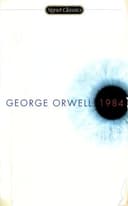 Nineteen Eighty-fourGeorge Orwell
In the Margins
Nineteen Eighty-four reviewed by @bleakhouse_bex
Everyone calls it political. It's a horror novel.9 out of 10@bleakhouse_bex
6 readers agree with this reviewNineteen Eighty-four reviewed by @verity_lane
Yes I've read it now. No, I'm not discussing it.7 out of 10@verity_lane
Nineteen Eighty-four reviewed by @saltmarsh
The rats. I skipped that part and I'm not sorry.8 out of 10@saltmarsh
The Reading Room
More from @an_ordinary_tuesday
H Is for Hawk reviewed by @an_ordinary_tuesday
A hawk and a dead father.9 out of 10H Is for Hawk
Siddhartha reviewed by @an_ordinary_tuesday
The river is the best character in it and I mean that as the highest praise.8 out of 10Siddhartha
2 readers agree with this reviewThe Waste Land reviewed by @an_ordinary_tuesday
April is the cruellest month and this is the cruellest poem, and I mean that with love and a great deal of confusion.7 out of 10The Waste Land