Reader’s Note
Shorter and stranger than its reputation
by@theodore_pWritten 26 September 2025Read 23 September 2025
If you come to this expecting a handbook for villainy you will be surprised twice: first by how much of it is dull administrative advice about mercenaries and fortresses, and second by the last chapter, the exhortation to liberate Italy, which abandons the cold register entirely and turns into something close to a howl. Chapter 26 does not sound like the man who wrote chapter 17. That discrepancy is the interesting problem, and most readers never reach it, because they stop after the lion and the fox.
I don't buy the ironic reading, Rousseau's line that it's a satire designed to warn republicans, but I understand why people want it. The Discourses are the republican book. This one is a job application, written by an unemployed civil servant who had been tortured by the family he was applying to, and it reads exactly like that: brilliant, servile, bitter, hurried.
On editions. The Skinner and Price text for Cambridge is the one I'd hand a student. The annotation is proportionate and the glossary of key terms is genuinely necessary, since virtù does not mean virtue and half the misreadings in circulation begin there. Avoid any translation that renders it as "prowess" throughout and then stops explaining itself.
Eight. It would be nine if the middle chapters on the various kinds of principality weren't such a slog, but those chapters were the whole point of the exercise for him, so I can hardly complain that they're in it.
About this book
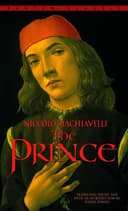 The PrinceNiccolo Machiavelli
The Reading Room
More from @theodore_p
Tinker Tailor Soldier Spy reviewed by @theodore_p
Smiley reconstructing an old file in a rented room beats any car chase ever filmed. The real subject is institutional decline and the spying is only how it gets delivered. Fifty pages of tradecraft vocabulary, and then you simply have it.9 out of 10Tinker Tailor Soldier Spy
Sapiens reviewed by @theodore_p
Very good lecturer, no archive.6 out of 10Sapiens
Letters from a Stoic reviewed by @theodore_p
Campbell's selection, not the complete letters. That matters.8 out of 10Letters from a Stoic