Reader’s Note
A winter's book. Fair on Spain, thin on the south.
by@the_slow_readerWritten 18 March 2026Read 15 March 2026
Postguerra took me from November to the end of February, which is longer than I give to any novel, and it was the right pace. This is not a book to hurry. Judt is doing sixty years and a whole continent and he does it chronologically, which sounds obvious and is in fact the difficult choice, because it means the argument has to be carried inside the narrative rather than announced at the front.
I did what everyone does and read the Spanish chapters first. The Transition, the pact of forgetting, the Moncloa agreements. He's fair. Better than fair. He treats it as a genuine achievement without pretending the silence was free, and he understands that the silence was a decision made by people who remembered the alternative. My father would argue with two of his paragraphs and agree with the rest, which is roughly the correct response.
Where would I push back? The south is thinner than the north. Portugal, Greece and to some extent Italy feel like they're being caught up with rather than lived in, and the further east he goes the more alive the writing becomes. He's clearly happiest in Prague and Vienna and Budapest.
Eight. The chapters on 1989 are worth the whole winter. He was there, and it shows, and he still resists the temptation to make it a story with a shape.
About this book
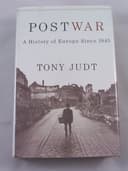 PostwarTony Judt
The Reading Room
More from @the_slow_reader
War and Peace reviewed by @the_slow_reader
The war is better than the peace.9 out of 10War and Peace
Sapiens reviewed by @the_slow_reader
In Spanish it's called De animales a dioses, a much better title. The first third, fine. After that he's explaining to me things which I already knew, and other things which I don't think he knows either. Has anyone checked the middle third?6 out of 10Sapiens
Beloved reviewed by @the_slow_reader
Took all summer.9 out of 10Beloved