Reader’s Note
Six days. For me that is running.
by@the_slow_readerWritten 7 May 2026Read 7 May 2026
One book a month is the rule and I broke it badly here. Six days — most of them late, one a Sunday where I did nothing else whatsoever and let the washing sit.
Sunja is the reason. She's introduced as a girl weighing fish at her mother's boarding house and by the time she's an old woman you've been beside her through four decades of decisions, almost none of which were free. That's the achievement of this novel. It's not a story about a person choosing her life. It's a story about a person arranging herself around what has already been chosen, over and over, with enormous stubbornness, and never once being pitiable.
I knew nothing about Koreans in Japan before this. Nothing at all! The registration, the fingerprints, the renewable permission to keep existing in the country where you were born, the surname you use at school which isn't your surname. Min Jin Lee explains none of it in a lecture. It arrives through paperwork, through a landlord, through what a teacher says to a boy. That's how it works in a life and that's how it's delivered here.
Hansu is a magnificent piece of construction. He should be a villain and he isn't, quite, and every time he reappears you feel both relief and dread, which is a difficult chord to keep striking for forty years of story.
Kyunghee and Yoseb I would happily have had more of. Two people holding a household together in a country which would prefer they weren't in it, quietly, for years, without either of them ever being the reason for a chapter.
Noa. I'm not going to say anything about Noa. It happens roughly two thirds through and I put the book face down on the arm of the chair and went and stood by the window for a while.
Nine. What costs it the tenth is the last section. Solomon's part in the eighties feels compressed, as though the author knew she had one more generation to get through and less room than she wanted. The banking chapters are the only place the book feels like it's summarising itself.
Also, small thing, I liked being told properly what a pachinko parlour is. The noise, the balls, the fact that the prizes aren't cash and the cash happens next door. A detail like that does more for a reader than a paragraph of atmosphere.
My grandmother left Galicia at nineteen and came back at sixty-one and never talked about the middle. I thought about her the whole way through and that isn't a literary reason to rate a book highly, and it's most of why I did.
I've bought two more copies since. One for my mother, one for a friend who says she doesn't like historical fiction, which this isn't, exactly.
About this book
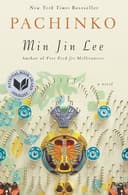 PachinkoMin Jin Lee
In the Margins
Pachinko reviewed by @libbyoverdrive
Worth all 47 weeks.9 out of 10@libbyoverdrive
Pachinko reviewed by @bookclubdropout
There was a proper silence afterwards.8 out of 10@bookclubdropout
Pachinko reviewed by @margaretreads
Four generations. I only really wanted the first two.8 out of 10@margaretreads
1 reader agrees with this review
The Reading Room
More from @the_slow_reader
War and Peace reviewed by @the_slow_reader
The war is better than the peace.9 out of 10War and Peace
Sapiens reviewed by @the_slow_reader
In Spanish it's called De animales a dioses, a much better title. The first third, fine. After that he's explaining to me things which I already knew, and other things which I don't think he knows either. Has anyone checked the middle third?6 out of 10Sapiens
Beloved reviewed by @the_slow_reader
Took all summer.9 out of 10Beloved