Reader’s Note
The library yes, the Franciscans no.
by@the_slow_readerWritten 12 February 2026Read 10 February 2026
Ricardo Pochtar's Spanish is the version I grew up seeing on other people's shelves, always in that Lumen edition with the dark cover, and it's the one I finally read. William Weaver's English I only dipped into afterwards to compare a few pages of the debate scenes. Weaver is more sinuous. Pochtar is drier and I suspect closer to the joke.
The Latin is left alone by both, which is correct and also means large stretches where I understood one word in six and refused to look anything up out of pride. Eco wanted that. He said as much afterwards, that the opening hundred or so pages are a penance designed to select the reader. I resent being selected and I passed the test anyway.
What's excellent: the library. The whole architecture of it, the mirrors, the room you can't get into, the map Adso draws. Also the murders, which are properly constructed, and William of Baskerville, who is a genuine pleasure, a man enjoying himself in a building full of people who have forgotten how. Also the final argument about laughter, and Jorge, who is the best villain I've met in a long time precisely because he has a coherent position and would not accept a single thing you said to him.
What isn't: the dispute over the poverty of Christ. Chapter upon chapter of Franciscans and papal delegates arguing about whether Christ owned his own clothes. I know it's the real fourteenth century. I know it's the political engine underneath the killings. I skimmed it. Twice, in fact, once on each attempt, and I was not enough patient to go back a third time, and if that means I read a lesser novel than the one Eco wrote then so be it.
Seven. The seven is an average of a nine and a four, which isn't really how ratings work; it is honest about the experience, though. Can a novel be excellent in one half and a punishment in the other? Apparently.
Something I liked which nobody seems to mention: Adso is old when he writes this. Very old. He keeps interrupting himself to admit he no longer remembers, or that his memory may be arranging events kindly, and there's a tenderness in those interruptions which the murder plot doesn't need and is much better for having. As for the Latin line at the very end, the one about the rose and the name, yes, I looked it up. Everybody looks it up.
The girl in the kitchen deserved better than the sentence she gets. Adso is heartbroken about her for the rest of his life and the book gives her about six pages. That bothered me more the longer I sat with it.
Then I watched the film with Sean Connery, which is not a good adaptation of this book at all, and enjoyed it enormously with a plate of something on my knees. Sometimes the reason you like a thing has nothing to do with the thing.
About this book
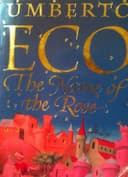 The Name of the RoseUmberto Eco
The Reading Room
More from @the_slow_reader
War and Peace reviewed by @the_slow_reader
The war is better than the peace.9 out of 10War and Peace
Sapiens reviewed by @the_slow_reader
In Spanish it's called De animales a dioses, a much better title. The first third, fine. After that he's explaining to me things which I already knew, and other things which I don't think he knows either. Has anyone checked the middle third?6 out of 10Sapiens
Beloved reviewed by @the_slow_reader
Took all summer.9 out of 10Beloved