Reader’s Note
Five feels harsh, and I still cannot get to anything higher without inventing an interiority that the novel deliberately withholds from both of its people.
by@mx_marginaliaWritten 8 February 2026Read 6 February 2026
I'd like to be told what I'm missing, and not in the way people say that when they mean the opposite. Four members of my club gave this a nine. One of them cried. I sat there with my five and my objections, feeling for once like the person who has misunderstood the assignment.
The consensus says this is a novel about class. I'd argue the class material is asserted more than dramatised. We're told repeatedly that Connell is poor and Marianne is rich, and the difference becomes visible in a handful of excellent moments: the car outside her house, his mother cleaning her mother's floors, the sick horror of the conversation about the sublet. Those moments contain the best writing here. Between them, though, class functions mostly as a fact the characters carry around rather than a force shaping what they're able to say and do. Set it beside Ferrante, where you cannot separate a character's sentence from the money standing behind it.
What actually drives the story is something else, and once you've seen it you can't unsee it. Every rupture between these two is a misunderstanding that one honest sentence would dissolve. He doesn't ask her to the ball because he assumes something she never said. She doesn't tell him he can stay because she assumes something he never said. The rent, Rachel, the flat in Dublin, the whole third act. Each break gets manufactured by the same withholding, deployed at intervals — and the intervals are what give the thing its shape.
Here's the defence, and it's a good one, so let me make it properly rather than knock over a weak version. Rooney's readers say the withholding is the subject and not the mechanism. These are two young people whose shame, formed by class and by a violent family, has made the honest sentence literally unavailable to them. Asking why they don't simply speak is like asking why the figure in a tragedy doesn't behave differently. The device is the psychology.
I nearly believe it. What stops me is the free indirect style. The narration goes inside Connell's head constantly and he is articulate in there. He names the problem. He understands the pattern. We get a paragraph in which he sees precisely what he ought to say and precisely why he isn't going to say it. A character who can perform that analysis internally and then produce nothing externally, over and over, at exactly the moments the plot requires it, is being managed by his author. If the shame runs that deep, the interior monologue shouldn't be that lucid. If the monologue is that lucid, the silence starts to look like construction.
On style I'll be less negative than expected. Dropping quotation marks isn't affectation. It puts speech on the same level as thought and weather and the description of a kitchen, flattening everything, and the flatness is clearly wanted. My difficulty is that it works better in Marianne's sections than in his, and I can't fully account for why. Something about how his voice sounds when it isn't marked as a voice.
Their emails, late on, are the best formal move in the book. Two people being more honest in writing than they've ever managed aloud, and no narrator anywhere commenting on that.
The part I would defend without reservation is Marianne's family. Those scenes are frightening and exact. Her brother's violence and her mother's refusal to see it are handled with no editorialising whatsoever, and the reader is left to notice that the abuse is boring to everyone involved, which is the most horrible and truest note struck anywhere here. Nobody who wrote those chapters is a lightweight, and people who dismiss the whole novel as romance with good hair haven't reached them.
So five. Two or three superb sequences, one enormous structural crutch, and a reputation calibrated for a different book. I'd read the next one. I have read the next one.
EDIT, a week later: my sister says the ending doesn't have him going to New York, that the book stops before any of it is settled, and that I've imported the certainty from the television adaptation. She's right and I feel stupid. The withholding objection stands, but I've amended the paragraph where I had him on a plane.
About this book
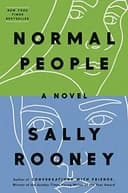 Normal PeopleSally Rooney
In the Margins
Normal People reviewed by @quietcarriage
Everyone told me I'd love this and I didn't, quite. Is it me? Probably it's me. The stretches where they're apart work better than the ones where they're together, which I suspect isn't the intended effect. My book group has taken it personally.6 out of 10@quietcarriage
Normal People reviewed by @three_chapters_in
no quotation marks and I somehow didn't notice at first. so far it is just two people completely unable to say one true thing to each other and I want to shake them, gently, one at a time9 out of 10@three_chapters_in
Normal People reviewed by @libbyoverdrive
Read the whole thing in a laundrette and then again on the bus home. No queue at all, which felt wrong for how much everyone talks about it.8 out of 10@libbyoverdrive
The Reading Room
More from @mx_marginalia
Atomic Habits reviewed by @mx_marginalia
Two stars, and I'll defend them.2 out of 10Atomic Habits
Stoner reviewed by @mx_marginalia
Slower than its own legend.7 out of 10Stoner
The Secret History reviewed by @mx_marginalia
Great novel, and it stops halfway.6 out of 10The Secret History