Reader’s Note
Enormous, and it will not once let you look at a tree without telling you how to feel.
by@mossandinkWritten 8 September 2025Read 9 September 2025
I am the reader for this book. I want to say that first, because a six from me is going to look like somebody who doesn't care about trees, and I have spent a good part of my life in and under them.
The first section is superb. Eight or nine long stories, each one a family and a tree, and the chestnut one — the family photographing the same tree from the same spot every year for a century until the blight comes for it — is as good as anything I have read this decade. I would have taken a whole book of those. I would take that chestnut story on its own, in a thin volume, and give it a ten without hesitating.
Then the roots become a trunk, and that's where it goes wrong for me. The characters converge, the thing becomes an activism plot, and somewhere in that process every one of them stops being a person and becomes a position. Patricia is the science. Nick is the art. Adam is the psychology of denial. Douglas is the anger. They speak their functions at one another for a very long stretch and I stopped being able to tell two of them apart, which I know is partly my failing and not entirely.
And here is what I actually resent. It doesn't trust me. Every time there is a tree there is an instruction about the tree. Every observation arrives with the feeling pre-attached, so that by the middle I was reading beautiful sentences about mast and duff and canopy with a small stubborn part of me refusing to be moved on schedule. The best writing about the natural world puts the thing in front of you and then gets out of the way. This one stands beside the thing with a hand on your shoulder.
Who is this for? Honestly, I think it is for people who have not yet noticed trees, and for them it may well be a converting book, and I'd not sneer at that for a second. Several people I like have told me it changed how they walk through a wood. Good. That is a real thing for a novel to have done.
But it does mean the reader who arrived already converted has nothing to do for six hundred-odd pages except be preached at in a register she already speaks fluently.
My other complaint is the ending, which goes vague and technological in a way that felt to me like a writer who had run out of ideas and reached for the future. And Neelay. I never for one moment believed in Neelay.
Six, and it's a real six rather than a disguised two. The writing is frequently magnificent, the ambition is enormous, I finished it in September over about five weeks, and I have thought about that chestnut a dozen times since. I've thought about it in spite of the book it is attached to, which is a strange position to be left in.
If you want the same material without the instruction, read Kimmerer instead. Slower, kinder, and content to let you do your own noticing.
About this book
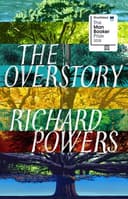 The OverstoryRichard Powers
In the Margins
The Overstory reviewed by @dnf_diaries
Finished, and I don't finish much. The opening section is eight short stories and it's the best thing I read all last year; the novel that grows out of it is baggier and I forgave it. Eight.8 out of 10@dnf_diaries
The Overstory reviewed by @saltmarsh
The trees are better than the people in it. He knows it, I think. The chestnut at the beginning is worth all the rest.8 out of 10@saltmarsh
The Overstory reviewed by @dr_bramble
Castanea dentata gets the opening it deserves. I cried at a tree, at work, in front of a student.9 out of 10@dr_bramble
The Reading Room
More from @mossandink
Meditations reviewed by @mossandink
Admirable, and airless.7 out of 10Meditations
The Hidden Life of Trees reviewed by @mossandink
Kind-hearted, and useful on beech and on how a wood holds water. He keeps telling me the trees are friends, are mothers, are talking; and each time he does it I trust the observation a little less. Fine for a beginner. Not for me.6 out of 10The Hidden Life of Trees
Piranesi reviewed by @mossandink
Weather indoors, of all things.9 out of 10Piranesi