Reader’s Note
It sat on my shelf for forty-one years. My fault, not the book's.
by@ivor_stackWritten 30 August 2025Read 29 August 2025
Sylvia bought me this in a shop in York in 1978 and it went onto the shelf and stayed there through my entire working life. I read it properly two winters ago, forty pages at a time, over about eleven weeks. She would have been pleased I got to it and extremely irritated at how long that took.
What I didn't expect is that it's arranged the way a decent engineering history is arranged. Each chapter opens with a problem the previous chapter failed to solve. How does one put depth onto a flat surface? How do you make a figure stand rather than float? What is to be done about the fact that a painted room has one light in it and a real room has several? A solution arrives, the solution creates a new difficulty, the difficulty gets a name and a generation of men to work on it. I learned more from that sequence than from the six or seven gallery visits I have made in my life.
He opens by saying there is no such thing as Art, only artists. I took that for a trick when I read it and I now think it is the method: he declines to grade, and asks instead what the man was attempting and whether he brought it off. That is precisely how one is taught to look at a failed connection detail. Not is it ugly. What was it for, and did it do it.
Two complaints and they are real ones. The women are effectively absent, and later editions have dealt with this by adding a name here and there rather than by rethinking the shape, and it shows; an addition is not a redesign. The second is that the final chapters, the ones covering the last century, are noticeably weaker. He is out of sympathy with the material and it comes through as courtesy, which is worse to read than an argument would have been. He is also, and I say this without malice, a man who believes the Italians settled most of it and that everyone since has been arguing about the finish; you can feel the centre of gravity of the whole book sitting somewhere around 1500 and never really shifting.
My edition is old enough that the early plates are black and white, which for the chapters about colour is close to useless. I ended up with the book in one hand and a tablet in the other, looking the same painting up in colour, which isn't how anyone intended it to be read and worked perfectly well.
Eight. If you have never read anything about painting, start here, and leave the last four chapters until you have.
About this book
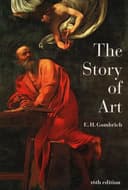 The Story of ArtErnst Hans Gombrich
The Reading Room
More from @ivor_stack
The Making of the Atomic Bomb reviewed by @ivor_stack
The best of them.10 out of 10The Making of the Atomic Bomb
Project Hail Mary reviewed by @ivor_stack
The problem-solving I enjoyed enormously; the jokes I could have done without about a hundred times. Seven, and most of it is for the chapter where he works out the units.7 out of 10Project Hail Mary
The Structure of Scientific Revolutions reviewed by @ivor_stack
I lived through one of these. Permissible stress gave way to limit state design over about a decade, and the older men never converted; they simply retired. He has the mechanism right and nearly everything else vague. Eight.8 out of 10The Structure of Scientific Revolutions